CBSE Class 9 Mock Tests 2026-27: Chapter-wise and Full-length Practice
Timed online practice for CBSE Class 9 based on the 2026-27 curriculum and new NCERT books.
colours of nature

Free
Motion - Class 9 Mock Test

Free
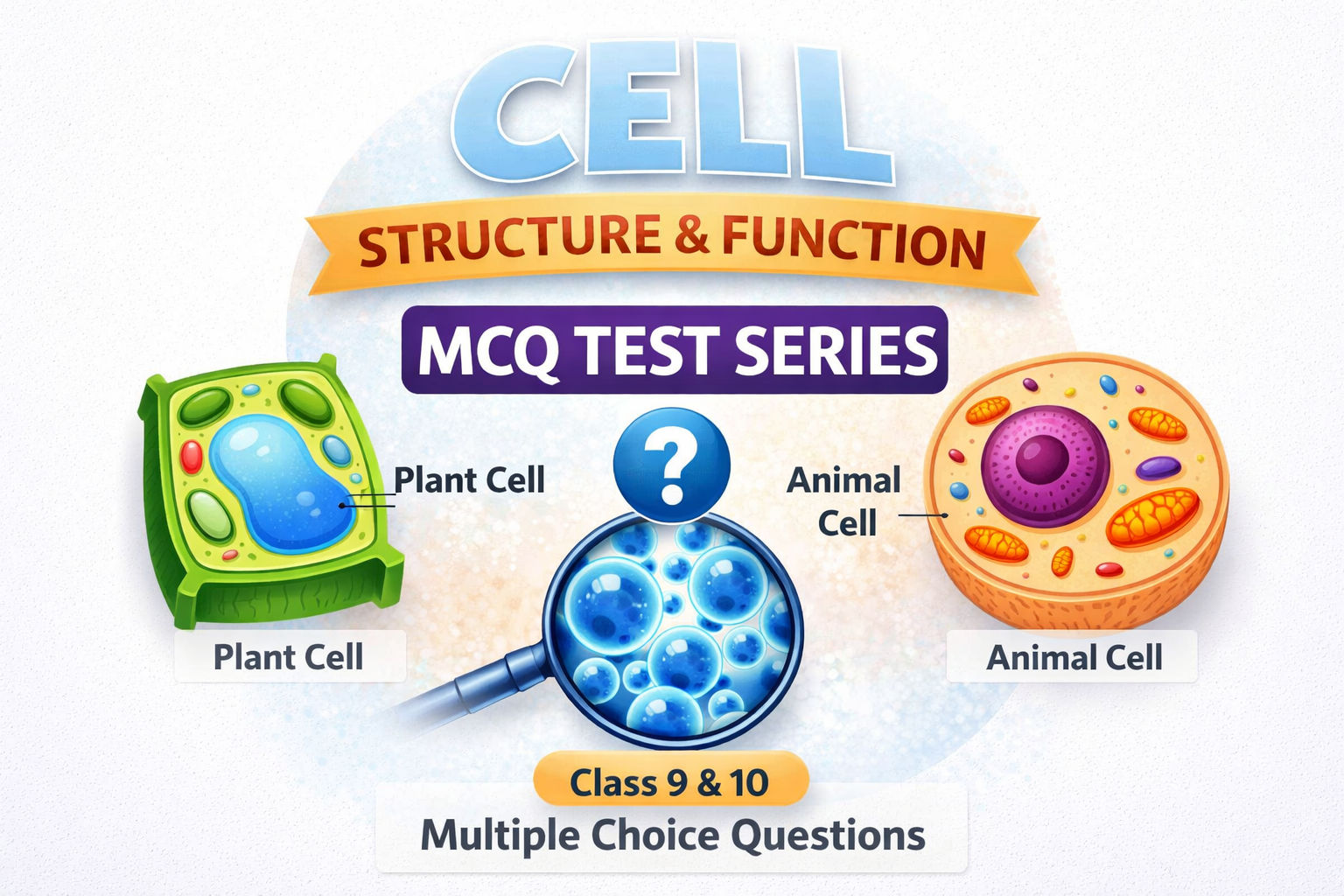
Cell - Structure and Functions MCQ Test
₹29
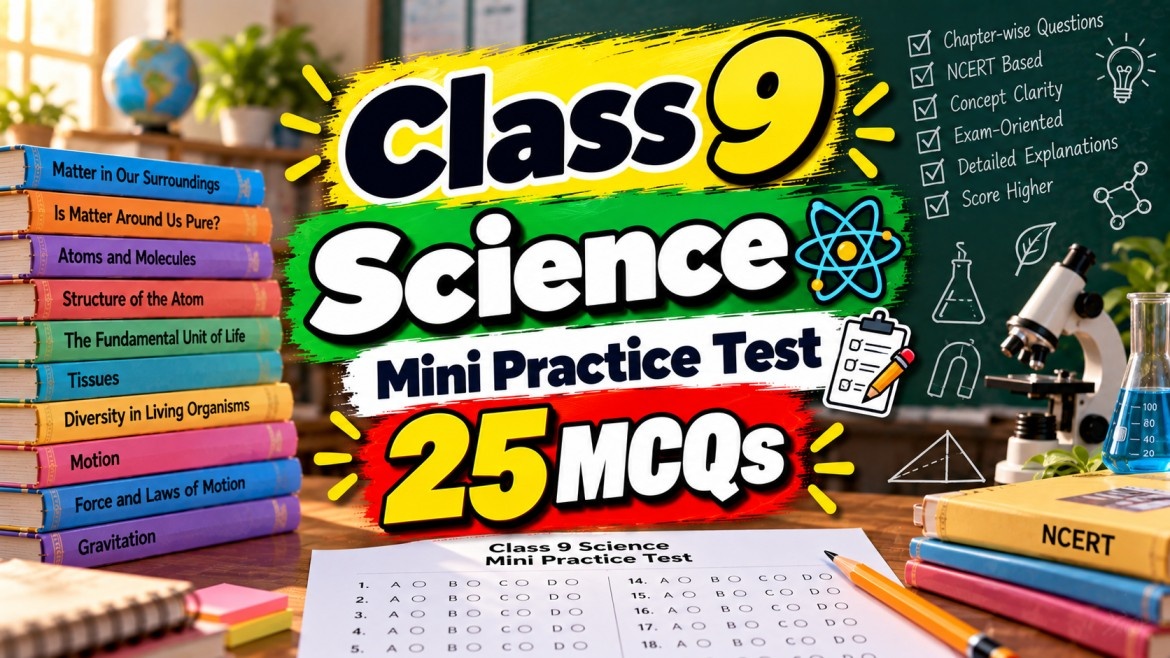
Class 9 Science Mini Practice Test | 25 MCQs
₹9
School Exams

₹29
Class 9 Physics Test Series: Kinematics, Mechanics & Sound

Free
CBSE Class 9 mock tests help you practise in the same format your school uses for periodic tests and the annual examination. In 2026-27 every core subject moved to new NCERT textbooks, and the question papers give real weight to application and higher-order thinking. Practising only textbook exercises does not prepare you for that mix or for the three-hour time limit.
This page explains which kinds of tests to take and when, the pattern to practise in, how to analyse each attempt and which numbers to track. It is written for students, with notes parents can use to support a steady routine.
Types of CBSE Class 9 tests
Test type | What it covers | When to take it |
|---|---|---|
Chapter test | One chapter, mixed question types | Within a week of finishing the chapter in class |
Unit test | A full unit, such as Algebra or World of Living | Before each periodic assessment |
Subject mock | Full 80-mark paper in one subject, 3 hours | From the second half of the session |
Case-based and competency sets | Source-based, assertion-reason and application questions | Weekly, alongside chapter tests |
Revision mock | Mixed chapters across the syllabus | Final six to eight weeks before the annual exam |
The pattern to practise in
Paper length: 80 marks in 3 hours for each main subject, with 20 more marks from internal assessment.
Mathematics mix: About 54% remembering and understanding, 24% applying and 22% analysing and higher-order questions.
Science mix: 50% knowledge and understanding, 30% application and 20% analysis and evaluation, including case-based and assertion-reason questions.
English: Reading 20, writing and grammar 30, literature 30.
How to use mock tests through the year
April to September: One or two chapter tests a week, untimed at first, then timed. Focus on accuracy.
October to December: Add unit tests before each periodic assessment and one competency-based set a week.
January onwards: One full subject mock every three to four days, rotating subjects, with same-day analysis.
Final two weeks: Fewer new mocks; revise from your error log and retake weak chapter tests.
How to analyse a mock test
Wrong answers: Write the correct method and the reason for the mistake: concept gap, calculation slip or misreading.
Slow questions: Note any question that took more than twice its fair time and practise similar ones.
Skipped but solvable: Mark questions you skipped and could solve later without help. These show where exam nerves cost marks.
Presentation: Check whether steps, units and diagram labels were complete, since marks are given for them.
Benchmarks to track
Measure | Why it matters |
|---|---|
Accuracy per chapter | Shows which chapters still need concept work |
Score by question type | Separates recall gaps from application gaps |
Time per section | Shows whether you will finish the paper with time to review |
Repeat errors | Mistakes that recur across mocks need targeted revision |
Common mistakes
Using old-syllabus papers: Older papers may include chapters that are no longer in the 2026-27 books.
Taking mocks without analysis: A mock without review only measures; it does not improve your score.
Starting full mocks too early: Full papers are more useful once most of the syllabus is covered.
Ignoring weaker subjects: Rotate subjects so no paper is left until the last week.
The official syllabus and question design are on the CBSE curriculum 2026-27 page.